
What Hockey Training Teams Should Order Before the Season Starts
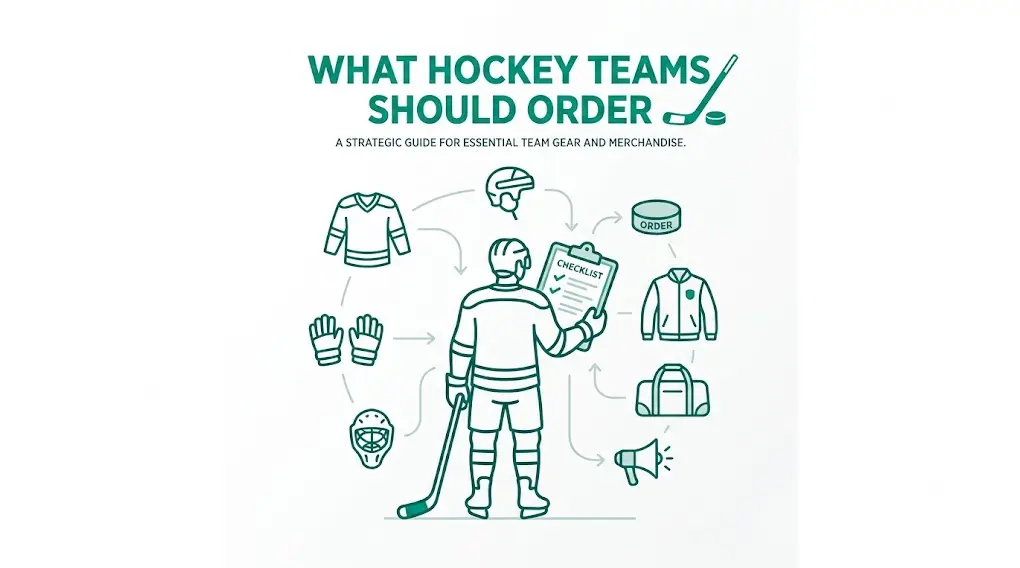
A training program can lose more time to missing roster details than to the jersey production itself. One late goalie cut, one wrong sleeve number, or one forgotten sock order can turn a clean team purchase into a messy reorder.
This guide gives coaches and managers a practical way to plan the full uniform order before the season starts, from player jerseys to replacement pieces.
The smartest order is not the biggest order. It is the one that matches the roster, the equipment, the deadline, and the way real hockey teams add players after everyone says the list is final.
Start with the roster, then build the order
Begin with the roster before opening a design tool. Names, numbers, sizes, captain letters, goalie cuts, and sock needs should be locked in one sheet so the designer is not chasing details across texts and emails.
For new custom sublimated team sets, minimums can apply. Some suppliers start at 5 pieces, while others require a larger team minimum. Repeat orders are often easier, but small-order fees may still appear.
Use this quick checklist before moving forward:
- Player name and number: Verify spelling and number choice against the roster sheet.
- Jersey size and fit note: Record the chosen size and whether the player wears bulky pads.
- Goalie cut if needed: Use a separate cut for bulkier gear.
- Captain or alternate letter: Confirm C/A assignments before proof approval.
- Matching sock size: Keep sock needs beside jersey sizes, not in a separate chat thread.
- Deadline or tournament date: Give production and shipping time enough room.
Order more than just player jerseys
Training teams usually need a cleaner kit than they first expect. A simple player-only jersey order can leave the group mismatched once socks, goalies, coaches, or late additions show up.
Think in sets. If the program practices together, travels together, or sells extra fan pieces, the order should account for how the group will actually use the gear.
Confirm mockups before production
A digital proof is not decoration. It is your last quality-control checkpoint before the order becomes physical inventory.
Check every visible surface: front crest, sleeve numbers, shoulder striping, back names, number contrast, sock colors, and the way goalie jerseys differ from player jerseys.
Plan for reorders and late players
Hockey rosters move. Players quit, join late, switch numbers, or need a replacement after a tournament weekend. Ask about repeat-order rules before the first payment, not after the season starts.
A good supplier relationship should make later add-ons less painful because the artwork, colors, and approved pattern are already on file.
Budget the order like a season tool, not a one-time purchase
Training teams put unusual wear on gear because the same jerseys may be used for practice groups, camps, scrimmages, and weekend events. That makes the lowest per-piece price less useful than the full-season plan.
Compare quotes by what is included: names, numbers, socks, design work, reorder rules, and turnaround. A slightly higher first order can be cheaper if it prevents rushed replacements later.
Our Amazing Collection of Hockey Uniform Will Also Help You Choose.
Separate training use from game-day use
A training top can be lighter and simpler than a full game jersey, but it still has to fit over pads and survive repeated washing. If the same jersey will be used for scrimmages, add more structure to the order.
Teams that train multiple age groups should avoid one generic size mix. Youth, adult, and goalie cuts need their own logic.
What managers should send to the supplier
Send the logo files, color notes, roster sheet, sock request, deadline, and any league restrictions in one message. That gives the designer a complete view instead of a scattered brief.
If a sponsor logo is involved, include placement priority. A sponsor mark on the shoulder, sleeve, or lower back changes the whole layout.
Details worth verifying before you order
This is where a generic article usually stays vague. A real team buyer should check the operational details that affect price, timing, fit, and whether the finished jersey matches the proof.
Use these checks to turn the article advice into a cleaner purchase:
- Player jerseys check: Core team identity and required roster item. Before approval, use this as a real order checkpoint: confirm names, numbers, and sizes together.
- Goalie jerseys check: Need extra sleeve/body room over larger pads. Before approval, use this as a real order checkpoint: do not treat as oversized player jerseys.
- Matching socks check: Completes the kit and avoids mismatched colors. Before approval, use this as a real order checkpoint: order with jerseys when possible.
- Replacement pieces check: Protects against late adds and damaged jerseys. Before approval, use this as a real order checkpoint: ask whether reorders have no minimum.
Common mistakes to avoid
Most team-order mistakes happen before payment, when the roster, sizes, artwork, and deadline are still half-confirmed.
- Approving scattered details: Use one roster and one proof as the final source of truth.
- Forgetting reorders: Late players and replacements are normal in hockey.
- Treating goalies like regular players: Goalie cuts need their own fit plan.
- Skipping sock decisions: Matching socks are harder to color-match later.
A practical team-order workflow
Start with the roster, then the artwork, then the mockup, then the payment. That order keeps the team from designing something beautiful around incomplete information.
Before the final sign-off, have one person outside the design process review the roster and proof. Fresh eyes catch the simple errors everyone else missed.
Training Team Order Checklist
item | Why it matters | Manager note |
Player jerseys | Core team identity and required roster item | Confirm names, numbers, and sizes together |
Goalie jerseys | Need extra sleeve/body room over larger pads | Do not treat as oversized player jerseys |
Matching socks | Completes the kit and avoids mismatched colors | Order with jerseys when possible |
Replacement pieces | Protects against late adds and damaged jerseys | Ask whether reorders have no minimum |
Pro tip: Build one roster spreadsheet and use it as the source of truth. If a captain changes a number in a chat thread, update the sheet before approving the mockup.
Conclusion
A strong team order starts with roster control, realistic sizing, mockup review, and a reorder plan. Once those pieces are clear, custom jerseys and socks become a managed purchase instead of a last-minute scramble.
FAQs
How many jerseys should a training team order?
Order one per rostered player, separate goalie cuts, and a few extras if the team expects late additions or tournament replacements.
Should practice teams order matching hockey socks?
Yes, if the group needs a polished team look. Socks are easier to match when ordered with the jersey design.
Do goalies need a separate jersey cut?
Usually yes. Goalie gear needs more room through the sleeves, chest, and body than a regular player cut.