
Why Baseball Is Fun for Players, Families, and Teams
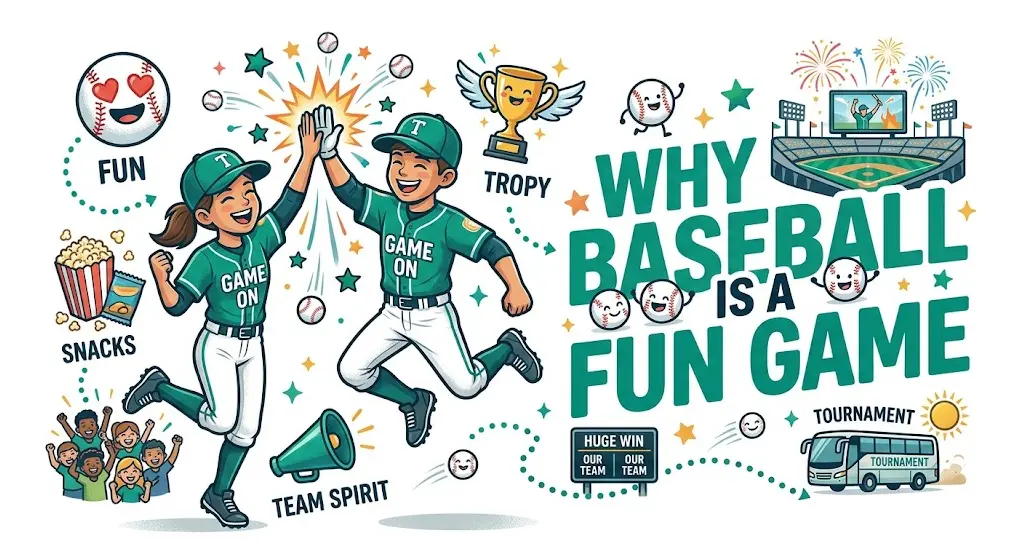
Baseball is fun because it gives players individual moments inside a team game. A catch, a hit, a good throw, or a dugout laugh can carry a whole day.
The sport has pauses, but those pauses create strategy, anticipation, and shared routines that other sports do not feel the same way.
Every player gets a moment
One ball can find any player. That keeps everyone connected, even during a slow inning.
A first clean catch or first hit becomes a memory because the whole team sees it happen.
Baseball gives players time to think and then asks them to react fast. That mix is part of the fun. A quiet inning can turn on one ground ball, one stolen base, or one deep fly. Players learn that attention matters even when the action pauses, which makes every position feel connected to the next pitch.
When celebrate small wins connects with person, the player gets a clearer feel for whether this fix is ready. The person decision should not create doubt once the player leaves the house. If person still feels uncertain during warmups, pause the change and make one cleaner adjustment before game speed.
The slow parts create strategy
Between pitches, players adjust positioning, runners read the defense, and coaches think ahead.
When young players learn what to watch, the game feels less slow and more like a puzzle.
The game also creates personal milestones at every skill level. A beginner remembers the first clean catch. A young hitter remembers the first hard line drive. A pitcher remembers throwing a strike when nervous. Those moments matter because baseball can be difficult before it becomes smooth. Fun often comes from finally doing something that used to feel impossible.
Use use uniforms for belonging as the parent or coach check before the player leaves for the field. For player, a neat result matters less than durability through sweat, dirt, handling, and movement. If player fails after one practice, revisit the material, size, or method instead of repeating the same quick fix.
Keep this short checklist nearby:
- Celebrate small wins
- Teach what to watch
- Build dugout energy
- Use uniforms for belonging
- Keep practice goals simple
See Our Full Line of Custom Made Baseball Uniforms.
Team routines build belonging
Warmups, uniforms, chants, snacks, and postgame talks all become part of the experience.
A matching jersey or cap can make a new player feel like they belong before their skills catch up.
Team identity adds another layer. Uniforms, walk-up songs, dugout routines, postgame snacks, and shared jokes become part of the season. Even players who are not stars can feel important when they know their role. A team that celebrates smart baserunning, good backup, and loud communication makes the game enjoyable for more than just the top hitters.
The parent choice turns a vague preference into a practical baseball decision. Match parent to the player’s age, position, weather, schedule, and care routine. If parent creates extra work before every game, the cleaner-looking option may still be the wrong one for a busy season.
Use this comparison before making the final call:
| Choice | Why it matters | Best use |
| Person | Fun moment | Why it matters |
| Player | First hit | Confidence |
| Parent | Shared routine | Memories |
| Coach | Skill growth | Purpose |
| Team | Uniform identity | Belonging |
Progress is easy to notice
Baseball gives small, visible wins: a cleaner throw, better swing timing, braver fielding, or smarter base running.
Those little wins keep players coming back because improvement feels real.
For families, baseball is often fun because it creates a rhythm. Practices, weekend games, road trips, and warm evenings at the field become memories. The sport has enough statistics for serious fans and enough simple drama for casual ones. That range is why a single game can hold a child’s attention and a grandparent’s attention at the same time.
After checking coach, pack or store the item in the same condition the player expects next time. Keep coach away from damp laundry, rubbing accessories, and untested last-minute changes. With use uniforms for belonging handled early, the player can focus on baseball instead of equipment noise.
Pro tip: Young players enjoy baseball more when they know their role before the ball is hit. Give them something to do every pitch.
Baseball is fun because it gives everyone a way into the story. One player loves the big hit, another remembers a clean catch, and another enjoys the dugout rhythm. Uniforms, team routines, postgame food, and shared field memories all add to the game. The sport leaves room for skill, patience, and belonging.
The best teams make room for different kinds of fun. Some players love statistics, some love uniforms, some love pitching duels, and some love being with friends. When coaches celebrate hustle, backup plays, communication, and good attitude, more players feel involved. That feeling keeps kids connected to the sport.
Baseball also rewards attention to small details. Backing up a throw, moving a runner, or cheering after a teammate’s mistake can change the feel of an inning. Those quiet contributions help more players enjoy their role.
Conclusion
Baseball is fun because it mixes patience, sudden action, personal progress, and team identity. The best memories often come from small plays, shared routines, and the feeling that every player belongs somewhere on the field.
FAQs
Why do kids like baseball?
They get personal moments inside a team setting.
Is baseball too slow for beginners?
It can feel slow until players learn what to watch between pitches.
Do uniforms help team spirit?
Yes. A clear team look helps players feel connected.