
What Is a Sublimated Jersey? A Practical Buyer’s Explanation
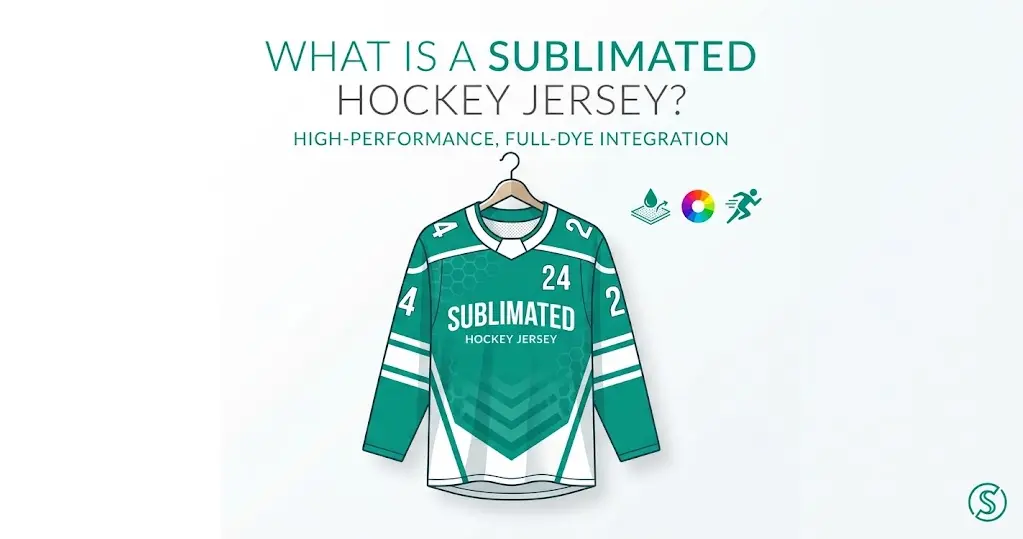
The easiest way to spot this kind of jersey is by touch. The design should feel like fabric, not like a sticker, patch, or thick printed layer.
For teams, that difference affects artwork, comfort, laundry, cost, and how many details can be included in one design.
The term sounds technical, but the buying decision is simple: you are choosing a polyester garment where the decoration becomes part of the fabric.
The simple answer
A sublimated jersey is usually made from polyester fabric that accepts dye under heat and pressure. The color bonds into the fibers, so the design does not sit on top of the garment.
That is why names, numbers, logos, patterns, and gradients can all be included without adding separate decoration layers.
Use this quick checklist before moving forward:
- Smooth feel: The decoration should not feel like a heavy surface layer.
- Polyester-heavy fabric: Needed for strong dye bonding.
- All-over artwork: Supports full-body design instead of isolated logos only.
- No raised vinyl edge: Helps with comfort and long-term wear.
- Strong for team personalization: Works well when every player has different details.
How it feels different from other decoration
Screen print, vinyl, and tackle twill all place something on the garment surface. That can be the right choice for some looks, especially classic stitched fanwear.
Sublimation is different because the decoration has almost no hand feel. Players usually notice the lighter finish more than the printing method itself.
Why teams choose it
It is practical for roster-heavy orders. Player names, numbers, sleeve graphics, sponsor marks, and complex color panels can be built into the same design.
That makes it useful for youth programs, adult leagues, tournament teams, and clubs that want a custom look without pricing every graphic separately.
What to check before buying
Ask about fabric content, proof approval, turnaround time, sizing, and care. The process is only as good as the garment and artwork behind it.
If the jersey is not polyester-heavy, sublimation is the wrong decoration method.
How to explain it to a team
If players ask what they are buying, keep the explanation simple: the artwork is dyed into the polyester, so the jersey stays smooth even with full customization.
That simple explanation helps people understand why the design can include more colors and details without feeling heavy.
When another method may be better
If the team wants raised stitched letters, a vintage pro look, or individual patch texture, sublimation may not satisfy the expectation. Tackle twill is often closer to that style.
If the team wants a light jersey with complex artwork, sublimation is usually the more practical choice.
Buyer checks before payment
Confirm the fabric, turnaround, sizing chart, proof process, and care instructions. The word sublimated tells you the decoration method, not the whole garment quality.
A good buyer checks the base jersey as carefully as the artwork.
Details worth verifying before you order
This is where a generic article usually stays vague. A real team buyer should check the operational details that affect price, timing, fit, and whether the finished jersey matches the proof.
Use these checks to turn the article advice into a cleaner purchase:
- Sublimation check: Complex full-body designs. Before approval, use this as a real order checkpoint: needs polyester-heavy fabric.
- Tackle twill check: Traditional stitched look. Before approval, use this as a real order checkpoint: more weight and labor.
- Vinyl/heat transfer check: Small runs and simple marks. Before approval, use this as a real order checkpoint: edges can age under heat.
- Screen print check: Simple repeated graphics. Before approval, use this as a real order checkpoint: less flexible for full roster art.
Common mistakes to avoid
Most sublimation mistakes come from assuming the method fixes every production problem. The artwork, fabric, and proof still decide the final result.
- Ignoring fabric content: The process works best on polyester-heavy material.
- Uploading weak artwork: Low-quality files can make a high-quality garment look cheap.
- Expecting stitched texture: A smooth finish is a feature, not a raised twill effect.
- Skipping care rules: Cold washing and hang drying still protect color and fabric.
A practical approval workflow
Start with the garment and artwork before talking about decoration. Confirm polyester content, design complexity, included personalization, proof timing, and care rules before the team approves the order.
Before final approval, zoom out on the mockup and check whether the graphics still read clearly. Sublimation gives design freedom, but clarity is what makes the jersey feel professional.
Quick Decoration Comparison
| Method | Best for | Watch out for |
| Sublimation | Complex full-body designs | Needs polyester-heavy fabric |
| Tackle twill | Traditional stitched look | More weight and labor |
| Vinyl/heat transfer | Small runs and simple marks | Edges can age under heat |
| Screen print | Simple repeated graphics | Less flexible for full roster art |
Pro tip: Run your hand over the number area. If the design feels like the same fabric, you are probably looking at sublimation.
Conclusion
Sublimated teamwear is best understood as dye built into polyester fabric. It gives teams design freedom, a smooth feel, and efficient personalization, as long as the garment and proofing process are solid.
FAQs
Are sublimated jerseys good quality?
They can be excellent when made on the right polyester fabric with a clean production process.
Do sublimated jerseys fade?
Good pieces are designed to hold color well, but cold washing and hang drying still protect the garment.
Is a sublimated jersey embroidered?
No. Embroidery is stitched thread; sublimation is dye bonded into fabric.