
Bulk Apparel Sublimation Guide
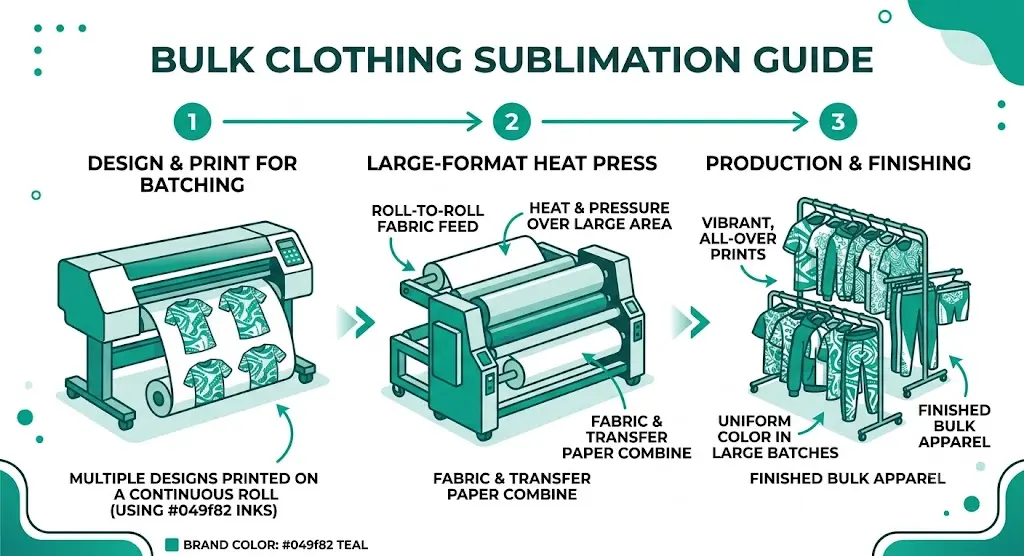
If you’re ordering custom apparel in South Florida, dye-sub should be your default question, not an afterthought. Sublimation printing in Miami exists for one blunt reason: this climate destroys heavy printed garments, and dyed polyester is built for it.
This guide covers why the method fits the city so well, how to vet a local shop, what rush orders really cost, and when a national bulk supplier quietly beats going local.
The Miami Sublimation Scene: What Buyers Should Know
The local market runs on lightweight polyester which is exactly the fabric this process requires. Dye-sub ink becomes part of the fiber, so there’s no plastic layer trapping heat against skin in 90-degree humidity. For year-round outdoor wear, that’s decisive.
A few buyer segments drive most of the volume here:
- Performance activewear: gyms, run clubs, and youth leagues live in moisture-wicking poly that dye-sub prints edge to edge.
- Boating and fishing shirts: long-sleeve UPF performance shirts with all-over prints are practically the local uniform.
- Hospitality and resort wear: hotels, beach clubs, and restaurants reorder branded polos and camp shirts constantly.
- Events and festivals: music events, 5Ks, and conventions need loud, full-color shirts on tight deadlines.
- Latin American trade: the city is a re-export hub, and apparel buyers routinely order here for teams and businesses across the region.
That mix keeps dozens of shops busy which is good for buyers, because competition keeps pricing honest. It also means quality ranges from excellent to alarming, sometimes on the same block.
How to Vet a Local Shop
- Ask for a washed sample: not a fresh print. Dye-sub done right survives fifty washes; a sample that’s been through five tells you more than any portfolio.
- Get turnaround in writing: with a stated policy for what happens if the date slips.
- Confirm in-house production: some storefronts broker the work out, adding days and markup you can’t see.
- Check fabric specs, not just art: ask the exact polyester percentage and fabric weight being quoted.
- Bilingual service matters: if your team or your buyers work in Spanish, confirm the shop can handle specs and revisions in both languages.
Pro tip: judge a shop by its seams. On all-over prints, look where panels meet, clean shops align patterns at the seams, rushed shops don’t. It’s the fastest quality test that exists.
Rush Orders: The Honest Reality
Local shops sell speed, and for genuine emergencies, an event moved up, a sponsor added Thursday, paying a rush premium makes sense. Same-week delivery on a small run is a real local advantage.
But rush pricing typically adds 25–50%, and cut-and-sew all-over work can’t be honestly rushed at all: printing, cutting, and sewing each take real time. A shop promising 300 fully sublimated jerseys in three days is cutting a corner you’ll find later.
When a National Bulk Supplier Wins
Local isn’t automatically better, it’s better for specific situations. Here’s the honest split:
| Your situation | Better fit |
| Small run needed this week | Local shop, rush fee and all |
| 300+ piece uniform or team program | National bulk supplier lower per-unit, consistent dye lots |
| Repeat seasonal reorders | Bulk supplier with stored art files and locked pricing |
| Complex cut-and-sew all-over designs | Whoever shows the best washed samples, verify, don’t assume |
| Last-minute sampling before a big order | Local for the sample, bulk for the run |
At volume, the math flips hard. A bulk supplier running large-format presses all day gets per-unit costs a storefront can’t touch, and two-to-four-day shipping erases most of the local speed advantage on planned orders.
That’s where we come in. We produce sublimated apparel in bulk;, activewear, jerseys, uniforms, all-over prints, with fast nationwide shipping and washed samples on request. Send your quantities through our contact page and you’ll have a real quote back fast.
Conclusion
Buy local when speed genuinely matters; buy bulk when volume, consistency, and per-unit cost do. Either way, demand washed samples, written turnaround, and real fabric specs. The shops worth your money answer all three without flinching.
FAQs
Why is dye-sub so popular for South Florida apparel?
Climate. The process dyes lightweight polyester instead of layering plastic on top, so shirts stay breathable and prints can’t crack or peel, exactly what constant heat, sweat, and salt air demand.
What’s a typical local turnaround for custom apparel?
Simple transfer work on stocked blanks: often two to five business days. Cut-and-sew all-over garments: one to three weeks. Anything faster usually carries a rush premium of 25% or more.
Can I get cotton shirts printed this way?
Not true cotton, the dye only bonds with polyester. For dark or cotton garments, shops switch to DTF or screen printing; a good one will steer you there honestly.
What minimums should I expect for bulk pricing?
Meaningful per-unit breaks usually start around 50 pieces, with the steepest discounts past a few hundred. If you’re between tiers, most suppliers will flex to win a repeat customer.