
How to Wrap a Baseball Glove for Pocket Shape and Storage
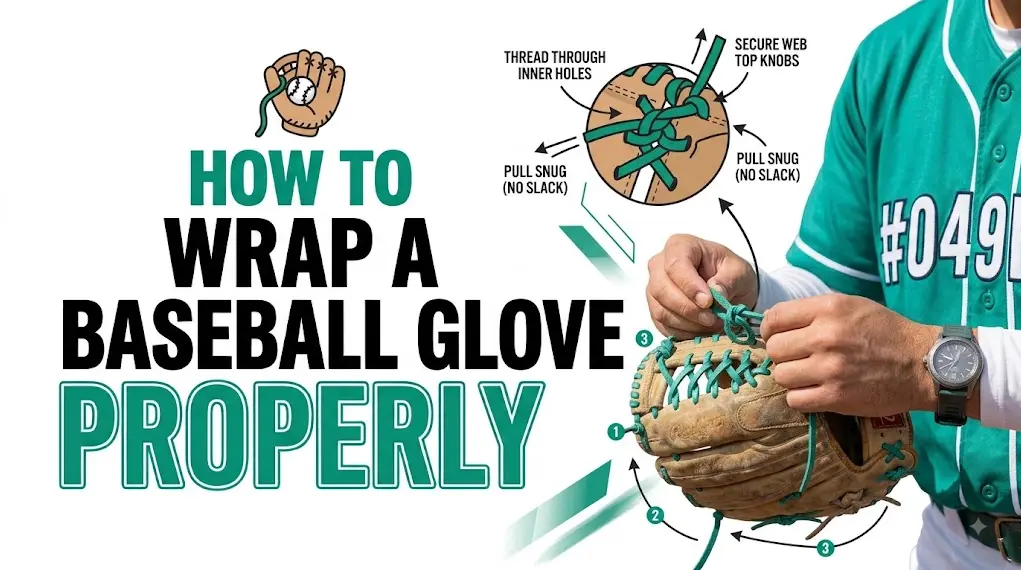
A glove wrap is useful when it protects the pocket you already shaped. It becomes a problem when it crushes the glove flat or bends the fingers in an unnatural direction.
The simple version is this: add a ball, close the glove the way it should close, and use even pressure. Storage is part of glove care.
Set the pocket before adding pressure
Put a baseball in the spot where the player wants the pocket to hold. That gives the leather a shape to remember while it rests.
Close the glove on its natural hinge. If the fingers twist sideways, unwrap and reset before leaving it overnight.
The ball placement matters more than the wrap itself. Set the ball where catches actually land, then close the glove along the same hinge the player uses on the field. A pocket formed too close to the heel can make transfers slow. A pocket pushed too far into the web can make the glove feel awkward. Take one minute to set that spot correctly before adding pressure.
When place a ball in the pocket connects with storage choice, the player gets a clearer feel for whether this fix is ready. The storage choice decision should not create doubt once the player leaves the house. If storage choice still feels uncertain during warmups, pause the change and make one cleaner adjustment before game speed.
Wrap firmly without crushing the fingers
The wrap should hold the glove closed, not flatten it. Even pressure around the glove body is cleaner than tight rubber bands around one finger.
If you use a strap, tuck it securely and check that no edge digs into the leather.
Even pressure prevents weird finger bends. A glove can look neatly wrapped while the index finger is being pulled sideways or the thumb is folding inward. That is why straps designed for gloves are cleaner than random tight bands. If you use elastic, keep it broad and gentle. The wrap should remind the glove of its shape, not punish the leather into a crease.
Use avoid hot storage spots as the parent or coach check before the player leaves for the field. For ball plus wrap, a neat result matters less than durability through sweat, dirt, handling, and movement. If ball plus wrap fails after one practice, revisit the material, size, or method instead of repeating the same quick fix.
Keep this short checklist nearby:
- Place a ball in the pocket
- Close along the natural hinge
- Use even pressure
- Avoid hot storage spots
- Check laces before long storage
Explore Our Exclusive Baseball Uniforms Designed With Sublimation Techniques.
Store the glove in a dry place
A good wrap does not protect the glove from heat or moisture. Keep the glove out of hot cars, damp basements, and bags full of sweaty gear.
For team equipment, use a shelf or open bin where gloves are not buried under helmets and cleats.
Long storage needs airflow and protection from weight. A glove left under bats, helmets, or damp uniforms can lose pocket shape even when it is wrapped. For an offseason bag, loosen the wrap occasionally, check the laces, and let the glove breathe before putting it away again. A dry shelf, cubby, or open equipment bin is better than a sealed bag that traps moisture.
The rubber bands choice turns a vague preference into a practical baseball decision. Match rubber bands to the player’s age, position, weather, schedule, and care routine. If rubber bands creates extra work before every game, the cleaner-looking option may still be the wrong one for a busy season.
Use this comparison before making the final call:
| Choice | Why it matters | Best use |
| Storage choice | Effect | Use it? |
| Ball plus wrap | Protects pocket shape | Yes |
| Rubber bands | Can bite into leather | Use carefully |
| Hot car | Dries and warps leather | No |
| Dry shelf | Prevents crushing | Yes |
Know when wrapping is not enough
A wrap will not fix cracked laces, a dead pocket, or leather that needs careful conditioning. It is a holding method, not a complete repair.
If the glove keeps opening flat, go back to hinge work and pocket shaping before relying on storage pressure.
Wrapping will not solve every glove problem. A flattened old pocket may need more catch work, a mallet session, or lace repair. A glove that smells must dry before storage. Leather that feels dry and rough may need careful conditioning first. Use the wrap as the final step after the glove is clean, shaped, and ready to rest.
After checking hot car, pack or store the item in the same condition the player expects next time. Keep hot car away from damp laundry, rubbing accessories, and untested last-minute changes. With avoid hot storage spots handled early, the player can focus on baseball instead of equipment noise.
Pro tip: Wrap the glove after it is shaped, not before. Pressure cannot replace the pocket work a player gets from catch.
Gloves spend more time in bags than on fields, so storage habits matter. After practice, let the glove dry, reset the ball in the pocket, and keep heavy gear from sitting on top of it. A simple wrap works best when the rest of the equipment routine supports it, especially during long gaps between games or over the offseason.
Conclusion
Wrapping works best as a storage habit. Add a ball, close the glove naturally, use even pressure, and keep it dry. Done well, the wrap protects the pocket instead of forcing the leather into a bad shape.
FAQs
How long should a glove stay wrapped?
Overnight is a good first test. Recheck the pocket before leaving it longer.
Can a glove be stored in a gear bag?
Briefly, yes, but long storage is better on a dry shelf where it will not be crushed.
Should the glove be wrapped after every game?
It helps if the player wants to preserve pocket shape, especially with a newer glove.