
CCM Hockey Jersey Size Guide: Pro, Replica, Youth, and Referee Fits
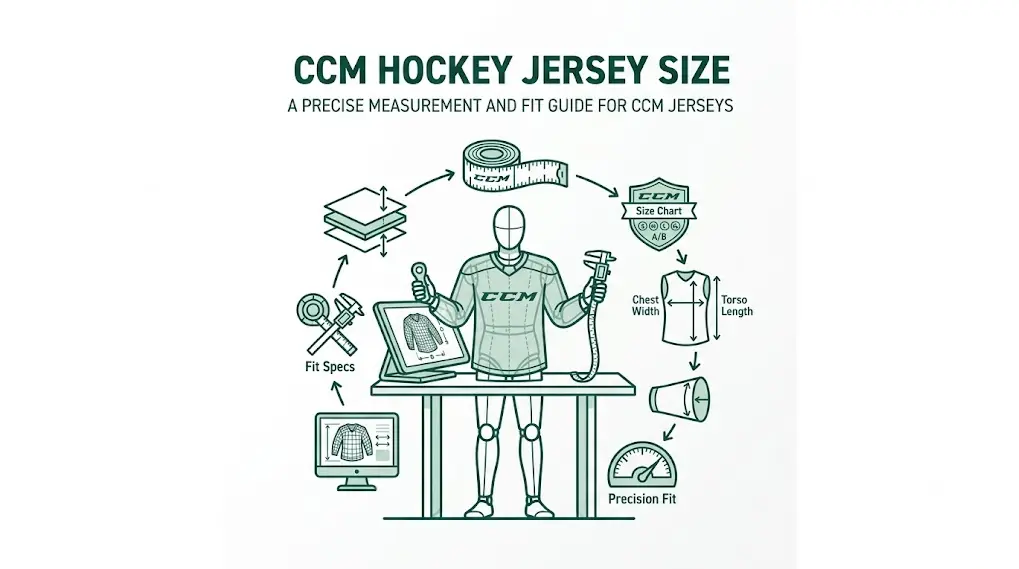
CCM sizing is not one single chart. Pro, replica, junior, senior, and referee jerseys can use different measurements and different fit expectations.
That is why the right chart matters more than the logo on the label.
Before choosing a size, identify the CCM jersey type you are buying and compare the garment measurements against how it will be worn.
Choose the correct CCM chart first
A pro-style jersey and a replica piece are not built for the same fit. Pro charts often use numbered sizing, while replica charts may separate junior and senior sizes differently.
Referee sizing can also use height and chest ranges, which should not be mixed with player sizing.
Use this quick checklist before moving forward:
- Pro or authentic style: Use the chart for that exact construction.
- Replica or fan style: Do not assume it matches pro sizing.
- Junior or senior category: Choose the correct age/fit group.
- Referee jersey: Use height/chest guidance when provided.
- Goalie-specific cut if available: Do not improvise from player sizing.
Compare garment measurements
Look for armpit-to-armpit width, body length, and sleeve-to-collar measurement. Those numbers tell you more than the letter size.
If the jersey goes over pads, compare it to a current jersey that already works.
Do not compare CCM directly to every other brand
Fanatics, NHL retail, CCM, and custom suppliers can all use different fit logic. A Medium in one system may not match a numbered size in another.
Use the chart tied to the actual product page.
Team order advice
For teams, keep the CCM chart link or measurement table next to the roster sheet. That keeps players from sending casual shirt sizes after the manager has already built the order.
If possible, run a sample try-on before approving the final proof.
Why CCM category matters
A buyer can get lost by searching for one universal chart. CCM pro, replica, referee, junior, and senior fits are built for different bodies and use cases.
Before comparing numbers, identify the actual product type.
Use CCM measurements in a team roster
For a bulk order, add the relevant measurement notes beside the size options. That helps players choose from the right chart instead of texting a casual shirt size.
It also helps the manager explain why one player’s size changed from a previous brand.
When to ask for supplier help
If a player is between sizes, broad through the shoulders, or wearing bulky pads, ask the supplier before guessing. A small sizing question is easier than a replacement order.
Goalie and referee needs deserve extra attention because their fit logic is different.
Have a Look at Our Specially Designed Custom Hockey Uniforms Through Sublimation.
Details worth verifying before you order
This is where a generic article usually stays vague. A real team buyer should check the operational details that affect price, timing, fit, and whether the finished jersey matches the proof.
Use these checks to turn the article advice into a cleaner purchase:
- Pro/player check: Numbered garment measurements. Before approval, use this as a real order checkpoint: confusing with fanwear labels.
- Replica check: Junior/senior chart. Before approval, use this as a real order checkpoint: assuming pro fit.
- Referee check: Height and chest range. Before approval, use this as a real order checkpoint: using player chart.
- Team custom check: Supplier chart plus pad check. Before approval, use this as a real order checkpoint: roster based on t-shirt size.
Common mistakes to avoid
Most sizing problems come from treating a hockey top like normal clothing. Equipment, cut, and product chart differences matter more than the label.
- Using shirt size only: A streetwear size does not account for shoulder pads, elbow pads, or goalie equipment.
- Mixing brand charts: Use the chart for the actual product, not a similar jersey from another supplier.
- Forgetting sleeve movement: A jersey can look long enough but still restrict the elbow area.
- Guessing for youth players: Kids need a gear-on check because growth and pad size vary widely.
A practical sizing workflow
Start with the product chart, then compare it against a jersey that already works over equipment. If the order is for a team, collect sizes in one sheet and flag players who are between sizes or wearing goalie gear.
Before final approval, scan the roster for patterns. If half the team sized up because of pads and one player did not, ask why. That small check catches the sizing outlier before production.
CCM Fit Decision Table
| Jersey type | Best sizing basis | Watch out for |
| Pro/player | Numbered garment measurements | Confusing with fanwear labels |
| Replica | Junior/senior chart | Assuming pro fit |
| Referee | Height and chest range | Using player chart |
| Team custom | Supplier chart plus pad check | Roster based on T-shirt size |
Pro tip: If the chart lists armpit-to-armpit width, double it mentally to understand approximate garment chest room.
Conclusion
CCM sizing works best when you match the chart to the exact jersey type. Use garment measurements, equipment fit, and product-specific guidance before locking sizes into a team order.
FAQs
Do CCM hockey jerseys run big?
They are often roomy compared with normal shirts, but the amount depends on the jersey type.
What measurements matter on a CCM jersey?
Chest width, body length, and sleeve-to-collar measurement are the key checks.
Is CCM size 50 the same as Fanatics size 50?
Not necessarily. Compare the specific product charts instead of assuming the number means the same fit.