
Youth Hockey Jersey Size Chart: How to Size Kids Without Guessing by Age
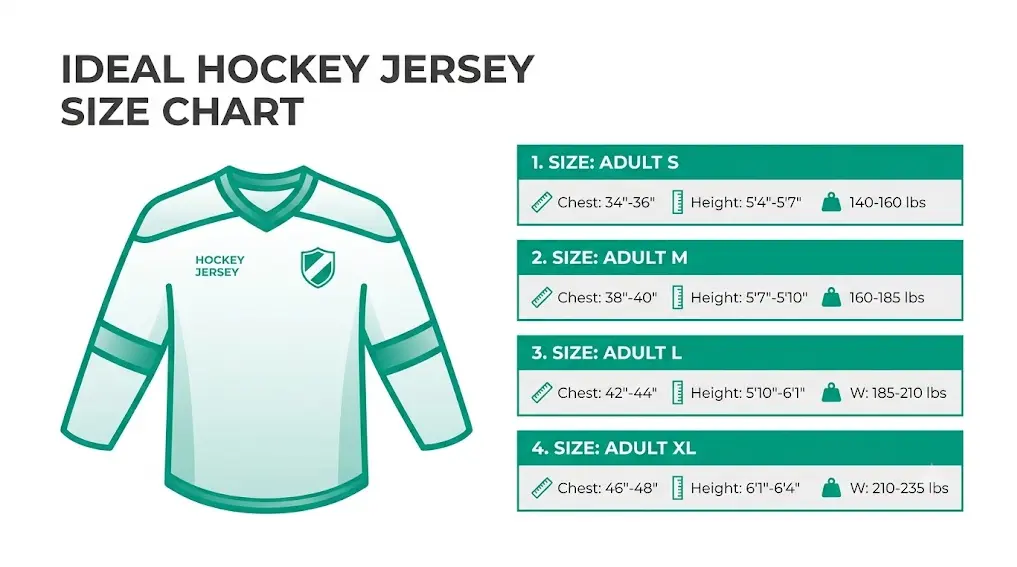
Youth sizing gets tricky because kids grow unevenly and hockey pads change the fit more than age does. Two players the same age can need different jersey sizes.
A good team order uses measurements, equipment checks, and a little growth room without turning the jersey into a tent.
The goal is simple: enough room for pads and movement, but not so much fabric that the player fights the jersey.
Measure over pads first
Ask players to wear shoulder pads and elbow pads before checking fit. A jersey that looks right over a T-shirt may pull badly once the equipment is on.
For team orders, sample try-ons are better than parent guesses.
Use this quick checklist before moving forward:
- Measure chest width: Use a flat jersey or supplier chart.
- Check sleeve coverage: Sleeves should cover pads without trapping gloves.
- Look at body length: Avoid fabric hanging too low.
- Confirm shoulder movement: Players should raise and rotate arms freely.
- Mark goalie cuts separately: Goalie sizing has different proportions.
Do not size by age alone
Age is only a loose reference. Height, shoulder width, pad size, and growth stage all matter more.
A youth large from one chart can fit differently from another supplier’s youth large.
Leave smart growth room
Youth teams often want room for the season. That makes sense, but too much extra fabric can twist, bunch, or interfere with gloves.
Choose the smallest size that fits comfortably over pads with reasonable movement.
Separate goalie orders
Young goalies still need goalie-specific room. Do not solve goalie sizing by jumping two player sizes without checking sleeve and body proportions.
A separate chart or supplier guidance is worth it.
Parents need a repeatable method
Parents often guess up because kids grow quickly. That is understandable, but too much extra fabric can get in the way of gloves and movement.
A repeatable measurement routine keeps the order fair across the whole team.
Coaches should collect sizes at one event
A gear-on sizing day is faster than weeks of messages. Players can try sample jerseys, coaches can mark goalie needs, and the final roster can be checked before the proof is made.
This also helps catch youth players who are moving into adult sizing.
Here some articles of Hockey Jerseys That Are Sublimated and Custom Made.
Leave room without losing control
Growth room should be modest. The jersey should cover the pads, allow reach, and sit cleanly over the pants.
If sleeves hang too far into the glove, the size is probably too large for play.
Details worth verifying before you order
This is where a generic article usually stays vague. A real team buyer should check the operational details that affect price, timing, fit, and whether the finished jersey matches the proof.
Use these checks to turn the article advice into a cleaner purchase:
- Shoulders check: Pads covered without pulling. Before approval, use this as a real order checkpoint: fabric stretched across pads.
- Sleeves check: Elbow pads covered. Before approval, use this as a real order checkpoint: sleeves trap glove movement.
- Length check: Covers pants cleanly. Before approval, use this as a real order checkpoint: hangs too low over legs.
- Goalie fit check: Room through arms/chest. Before approval, use this as a real order checkpoint: player cut feels tight.
Common mistakes to avoid
Most sizing problems come from treating a hockey top like normal clothing. Equipment, cut, and product chart differences matter more than the label.
- Using shirt size only: A streetwear size does not account for shoulder pads, elbow pads, or goalie equipment.
- Mixing brand charts: Use the chart for the actual product, not a similar jersey from another supplier.
- Forgetting sleeve movement: A jersey can look long enough but still restrict the elbow area.
- Guessing for youth players: Kids need a gear-on check because growth and pad size vary widely.
A practical sizing workflow
Start with the product chart, then compare it against a jersey that already works over equipment. If the order is for a team, collect sizes in one sheet and flag players who are between sizes or wearing goalie gear.
Before final approval, scan the roster for patterns. If half the team sized up because of pads and one player did not, ask why. That small check catches the sizing outlier before production.
Youth Sizing Checks
| Fit area | Good sign | Problem sign |
| Shoulders | Pads covered without pulling | Fabric stretched across pads |
| Sleeves | Elbow pads covered | Sleeves trap glove movement |
| Length | Covers pants cleanly | Hangs too low over legs |
| Goalie fit | Room through arms/chest | Player cut feels tight |
Pro tip: For youth teams, collect sizes after a gear-on try-on day. It beats chasing corrections after the order is approved.
Conclusion
Youth jersey sizing should be based on pads, measurements, and movement rather than age alone. A little growth room is useful, but the final fit still has to work on ice.
FAQs
What size hockey jersey should a child wear?
Use the supplier chart and check the fit over pads. Age alone is not reliable.
Should youth hockey jerseys be oversized?
They should have room for pads and movement, but not so much that sleeves and body fabric get in the way.
Is youth XL the same as adult small?
Not always. Youth and adult cuts can have different proportions.