
How to Hem Baseball Pants and Adjust the Belt for Game Fit
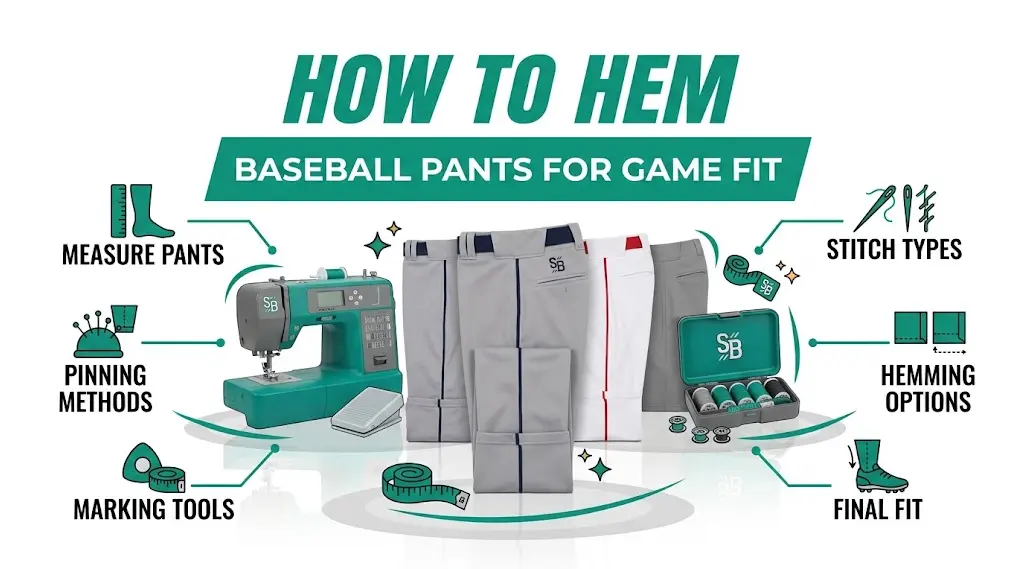
Baseball pants cannot be measured like dress pants. Cleats, socks, belts, crouching, and sliding all change where the fabric should sit.
The cleanest fit starts with the full uniform on. Measure the player the way they will actually move.
Measure with cleats and socks on
Have the player wear game socks, cleats, and the belt before marking length. Barefoot measurements usually lead to a bad break over the shoe.
Ask the player to stand naturally, then crouch and jog a few steps. The hem should still look controlled.
Pant length should be measured in baseball posture. Have the player wear cleats, socks, sliding shorts, and the belt before pinning anything. Then check the fit while standing, jogging, crouching, and taking a fielding position. Pants that look perfect barefoot in a bedroom can ride high over cleats or bunch behind the knee once the player moves.
When measure in cleats connects with pant style, the player gets a clearer feel for whether this fix is ready. The pant style decision should not create doubt once the player leaves the house. If pant style still feels uncertain during warmups, pause the change and make one cleaner adjustment before game speed.
Match the hem to the pant style
Open-bottom pants can break lightly over cleats. Elastic-bottom pants should sit higher and cleaner near the shoe opening.
Knickers are different again because they are meant to show socks or stirrups.
Leave room for growth only where it will not trip the player. Youth uniforms often need a little extra length, but too much fabric around the ankle collects dirt and catches on spikes. A temporary hem can be useful for growing players. For older players or tournament uniforms, a cleaner sewn hem usually looks sharper and holds up better through washing.
Use match pant style as the parent or coach check before the player leaves for the field. For open-bottom, a neat result matters less than durability through sweat, dirt, handling, and movement. If open-bottom fails after one practice, revisit the material, size, or method instead of repeating the same quick fix.
Keep this short checklist nearby:
- Measure in cleats
- Set the belt first
- Check crouching movement
- Match pant style
- Record inseam notes
Our Custom Designed Sublimation Baseball Uniform including Jerseys and Shirts.
Adjust the belt before judging length
A loose waist makes pants look longer than they are. Set the belt flat through every loop before pinning.
The belt should hold the pants during running without digging in or leaving a long loose tail.
The belt changes how the pants hang. If it is too loose, the waist drops and the hem looks longer than it really is. If it is too tight, the player may lose comfort when bending or sliding. Adjust the belt first, then mark the hem. That order prevents a tailor from cutting away length that the uniform actually needed.
The elastic-bottom choice turns a vague preference into a practical baseball decision. Match elastic-bottom to the player’s age, position, weather, schedule, and care routine. If elastic-bottom creates extra work before every game, the cleaner-looking option may still be the wrong one for a busy season.
Use this comparison before making the final call:
| Choice | Why it matters | Best use |
| Pant style | Ideal finish | Watch for |
| Open-bottom | Light break | Dragging heel |
| Elastic-bottom | Above shoe opening | Bunching |
| Knickers | Below knee | Sock visibility |
| Loose waist | Needs belt adjustment | False length |
Record fit notes for reorders
Team managers should keep waist, inseam, pant style, and belt color in one roster sheet. That makes replacement orders much easier.
If one player needs a hem, others probably do too. Check the roster before picture day.
After hemming, wash and recheck the pants before the first important game. Some fabrics relax, and stitched hems can sit slightly differently after laundering. Look at stripe alignment, knee position, and how the cuff meets the cleat. A uniform should look clean in team photos and stay out of the player’s way between the lines.
After checking knickers, pack or store the item in the same condition the player expects next time. Keep knickers away from damp laundry, rubbing accessories, and untested last-minute changes. With match pant style handled early, the player can focus on baseball instead of equipment noise.
Pro tip: If pants drag before the first inning, they will look worse after clay and grass. Fix length before the season starts.
Pant fit is both a uniform issue and a movement issue. Cleats, socks, belt tension, crouching, sliding, and growth room all affect the final length. Teams ordering custom pants should check fit in baseball posture before approving sizes. A clean inseam means little if the player cannot bend, run, and field comfortably.
For teams, the best fitting session happens before numbers and names are finalized. Have players try sample pants with the actual sock plan, belt style, and cleats. Mark any needed hem changes while they move, not while they stand still. A little extra care before ordering prevents uneven cuffs across the roster.
Conclusion
Baseball pant fit depends on movement, not a static measurement. Use cleats, socks, belt tension, and crouch tests before hemming. A clean fit keeps the uniform sharp and helps players move without extra fabric.
FAQs
Should baseball pants touch the cleats?
Open-bottom pants can lightly break over cleats, but they should not drag.
Can a belt fix pants that are too big?
It can help the waist, but it cannot fix poor length or excess leg fabric.
Should teams choose one pant style?
Yes, if the goal is a consistent roster look.